Most newcomers who contact me for an acting portfolio shoot usually begin with the same sentence.
“Sir, I don’t know how to pose.”
Some say it nervously. Some say it apologetically. Some try to laugh it off before the shoot even begins.
But after photographing aspiring actors, models, performers, and first-time camera faces for more than two decades, I can say this honestly — posing is rarely the real problem.
The actual problem is confusion.
Newcomers entering the acting industry are constantly watching reels, celebrity shoots, cinematic edits, dramatic lighting setups, and heavily retouched social media portraits. Eventually, they begin believing that an acting portfolio is about looking “stylish.”
It is not.
An acting portfolio is about looking believable.
That difference is exactly what shaped Rudrankur Sarkar’s portfolio session in Kolkata.
When Rudrankur First Contacted Me
Rudrankur was connected with the National Institute of Film and Fine Arts in Bhowanipore and was actively trying to build a stronger creative profile for future opportunities.
But during our initial conversation, one thing became clear very quickly.
He was not looking for random glamour photographs.
He wanted a portfolio that could actually help him in acting-related spaces — auditions, workshops, casting opportunities, and professional introductions.
That changes the entire approach of a shoot.
Because the moment someone says they want to enter acting, I stop thinking like a photographer for social media and start thinking like someone who understands how casting decisions work visually.
Casting directors do not care whether someone owns expensive clothes.
They care about:
- Expression
- Presence
- Eye confidence
- Emotional range
- Screen adaptability
- Facial honesty
And unfortunately, most beginners do not understand this when they book their first portfolio session.
The Biggest Mistake Newcomers Make
Many newcomers arrive with references from Instagram or Pinterest.
Perfect jawlines. Intense sunglasses. Oversized jackets. Artificial smoke. Aggressive editing.
They think acting portfolios should look like fashion campaigns.
But acting portfolios and fashion shoots are completely different worlds.
A fashion image sells clothing.
An acting portrait sells possibility.
That is why I always tell first-time actors:
A casting-ready portfolio should not hide your face behind editing, styling, or attitude.
It should reveal who you are in front of the camera.
That was the first thing I discussed with Rudrankur before the shoot even started.
Why We Did Multiple Looks
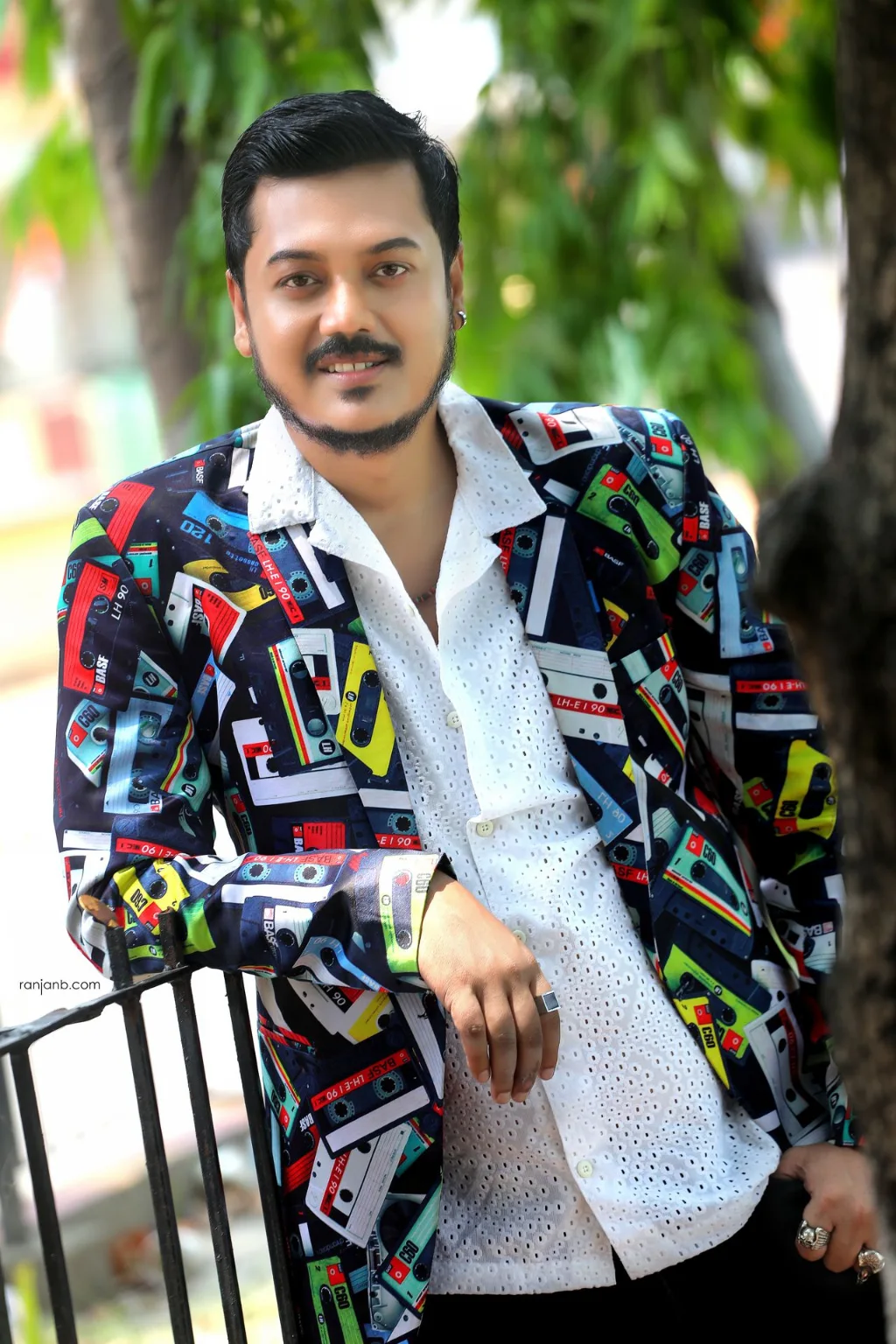
One look is never enough for an actor.
A casting team should be able to imagine different characters while looking at your photographs.
That does not mean wearing ten different costumes unnecessarily.
It means creating variation in:
- Personality
- Mood
- Energy
- Expression
- Styling
- Visual tone
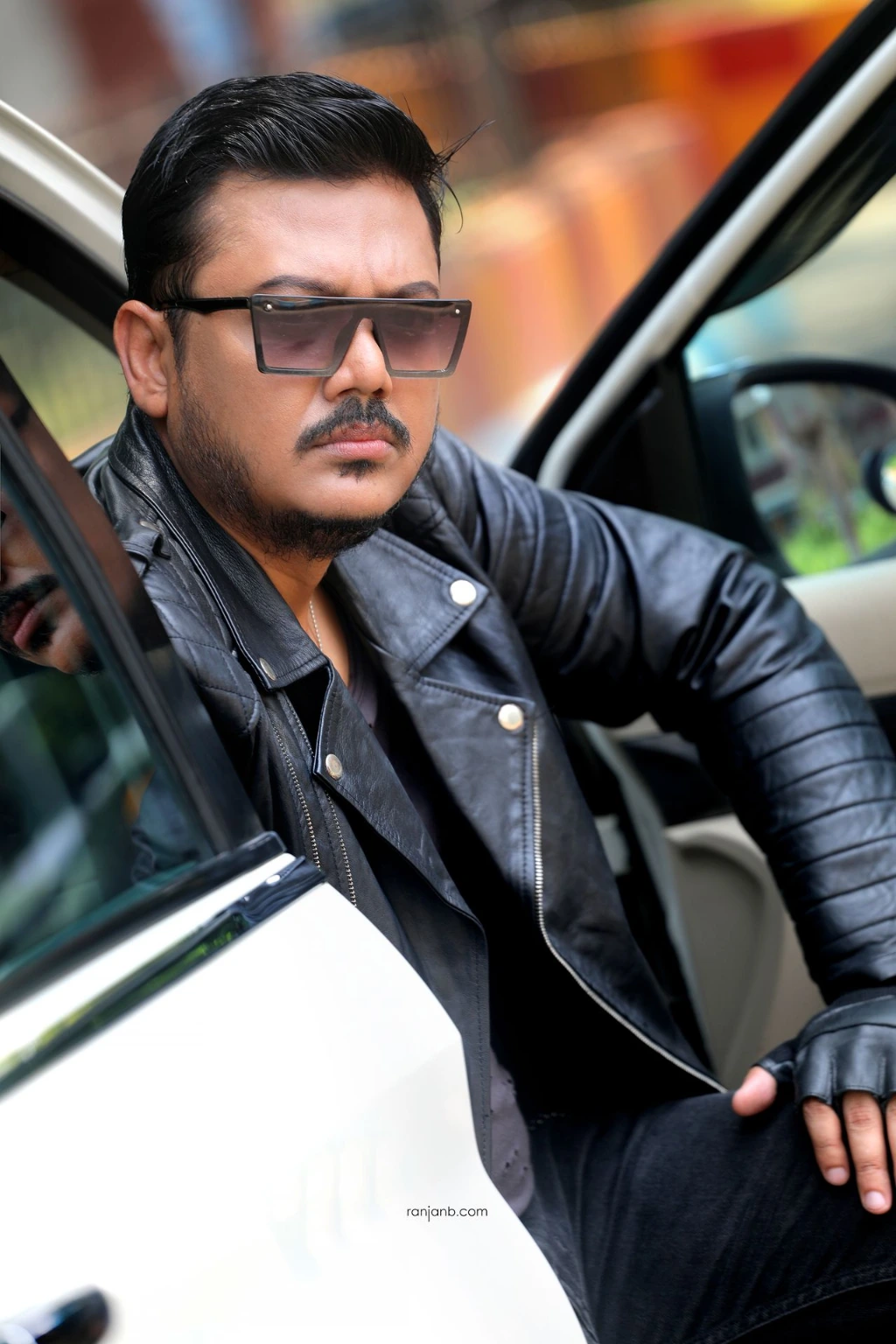
For Rudrankur’s session, I intentionally structured the shoot across different visual moods.
Some frames were urban and cinematic.
Some were softer and more approachable.
Some were traditional.
Some were intentionally minimal.
Because an actor’s portfolio should never feel visually one-dimensional.
The Problem With Overacting in Portfolio Shoots
This is another thing beginners rarely realise.
The moment many newcomers stand in front of a camera, they begin “acting.”
Suddenly, the expressions become dramatic. Eyebrows tighten. Chin angles become unnatural. Eyes become overly intense.
Ironically, this makes the photographs weaker.
A good acting portfolio is not about over-performance.
It is about controlled realism.
One of the reasons Rudrankur’s session worked well was that we did not rush into exaggerated expressions immediately.
The first phase of the shoot was actually about removing self-consciousness.
That matters more than lighting.
If someone feels uncomfortable, the camera always catches it.
Confidence Cannot Be Edited Later
Many people believe confidence can be fixed in Photoshop.
It cannot.
Skin can be retouched.
Colors can be corrected.
Backgrounds can be cleaned.
But hesitation inside the eyes remains visible.
That is why creating comfort during a portfolio shoot becomes extremely important, especially for first-time actors.
In Rudrankur’s case, the transformation during the session itself was interesting to watch.
Initially, there was natural stiffness. Very common for newcomers.
But slowly, after conversation, guidance, posture correction, and relaxed interaction, the body language started changing naturally.
That is usually the moment when the real portfolio begins.
Not when the camera clicks for the first time.
But when the person stops trying too hard.
Why I Prefer Realistic Editing for Actors
I have noticed something over the years.
The more heavily edited a portfolio becomes, the less believable the actor starts looking.
Newcomers often ask for:
- Extra smooth skin
- Sharper jawlines
- Artificial fairness
- Unreal color tones
- Extreme cinematic grading
But modern casting directors are becoming smarter visually.
They want authenticity.
Especially now, when OTT platforms and realistic storytelling have changed audience expectations completely.
That is why I prefer preserving natural texture and facial character in acting portfolios.
For Rudrankur’s portfolio, the editing approach remained controlled and realistic.
The idea was not to make him look artificial.
The idea was to make him look castable.
There is a huge difference between those two things.
Traditional Looks Matter More Than People Think
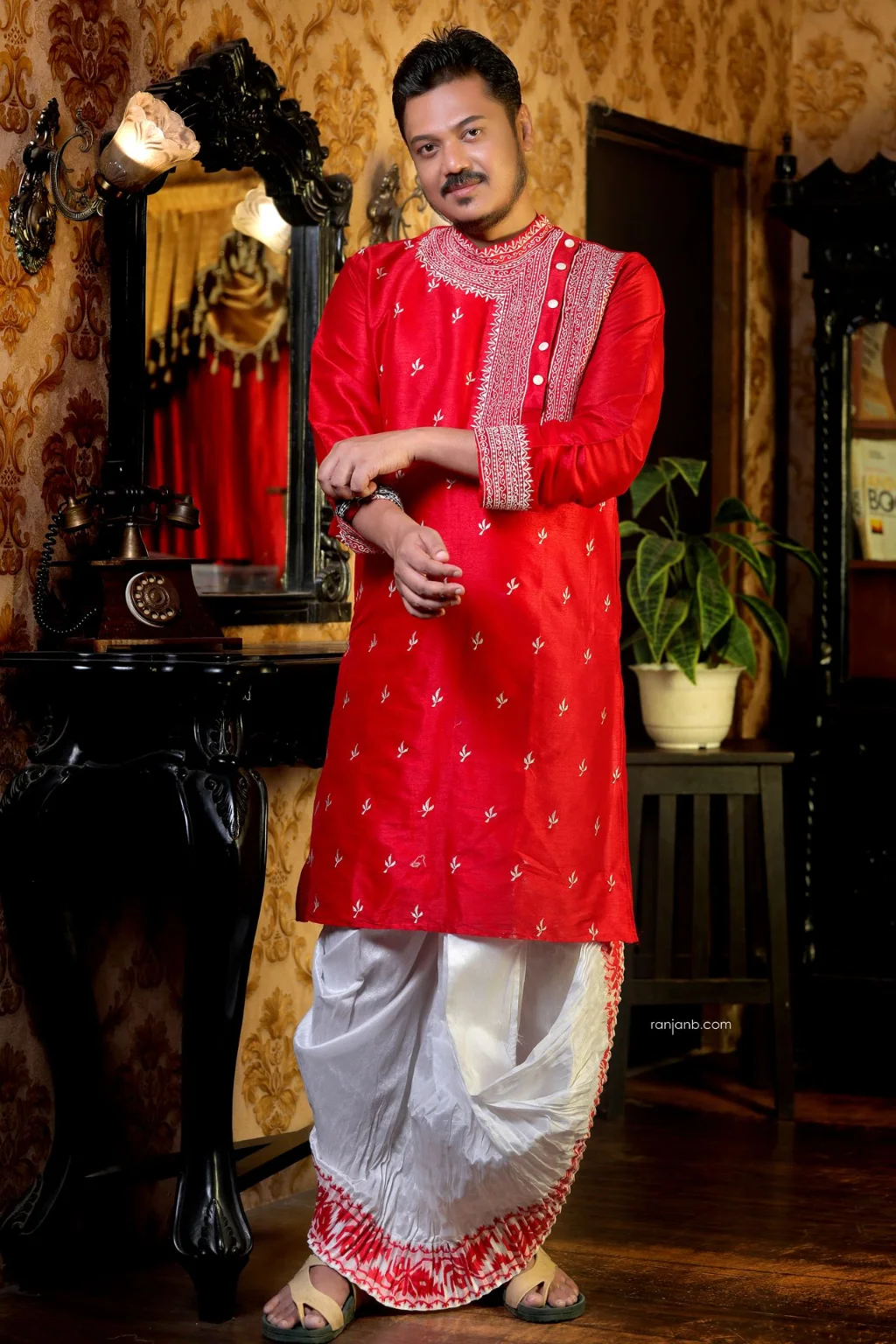
One of the strongest parts of this portfolio, in my opinion, was the inclusion of traditional styling.
Many aspiring actors ignore ethnic looks completely.
Big mistake.
Regional cinema, OTT productions, advertising campaigns, family dramas, and cultural films — all require visual adaptability.
An actor who only looks good in western casual wear limits his own presentation range.
That is why we included traditional Bengali styling during the session.
And honestly, some of those portraits carried a very strong screen presence naturally.
Not because of expensive setups.
But because the styling matched the personality instead of overpowering it.
Outdoor Portraits vs Studio Portraits
Another thing newcomers often ask me is:
“Sir, outdoor better, na studio better?”
Truthfully, both matter.
Studio portraits help create:
- Controlled lighting
- Clean professional headshots
- Strong facial focus
- Cinematic mood
Outdoor portraits help reveal:
- Natural body language
- Comfort level
- Environmental realism
- Movement and personality
That is why balanced acting portfolios usually need both.
For Rudrankur’s session, I did not want every frame to feel too polished.
Some photographs needed breathing space.
Some needed natural surroundings.
Some needed visual silence.
That variation is what ultimately gives a portfolio rhythm. I remember discussing this quite differently during another actor portfolio session in Kolkata involving Sayan Mitra, where the visual approach depended far more on stillness, restraint, and controlled expressions than environmental variation.
Good Clothing Does Not Automatically Mean Good Photographs
This is another misconception.
Many newcomers spend enormous amounts of money buying clothes before shoots.
But camera presence does not come from clothing alone.
In fact, sometimes the simplest outfits photograph best.
Why?
Because the face becomes the focus.
During Rudrankur’s session, some of the strongest images were not necessarily the most expensive-looking ones.
They were the frames where:
- Expression felt natural
- Posture relaxed properly
- Eye connection became believable
- Styling stopped looking forced
Photography becomes powerful when personality starts becoming more visible than clothing.
What New Actors Should Actually Prepare Before a Portfolio Shoot
Honestly, before any acting portfolio session, I would advise newcomers to focus on these things instead of copying celebrity references endlessly.
Sleep properly before the shoot
Tired eyes cannot be fixed completely later.
Avoid over-practicing expressions
Natural reactions always look stronger.
Carry comfortable outfits
Confidence matters more than trends.
Do not imitate actors during the shoot
Your own face already has individuality.
Trust the process
The first 20 minutes are often awkward for everybody.
Focus on communication, not posing
A portfolio is visual communication.
The Difference Between Looking Good and Looking Right
This is probably the most important thing I have learned from actor portfolio photography over the years.
Anyone can look good in a photograph.
But not everyone looks right for acting.
Acting portfolios require emotional readability.
The face should feel approachable to the camera.
There should be room for interpretation.
That subtle quality is difficult to explain technically, but casting directors recognise it instantly.
And that was ultimately the goal behind Rudrankur’s session.
Not to create random glamorous images.
But to create photographs that felt usable, believable, and visually adaptable.
A Portfolio Should Help You Move Forward
Interestingly, one thing I have noticed over the years is that confidence slowly starts becoming visible beyond the portfolio itself.
Many newcomers initially hesitate, even while uploading their own photographs publicly online. But once they begin seeing themselves differently through the camera, that hesitation gradually changes.
In Rudrankur’s case, too, the portfolio eventually became part of how he started presenting himself more confidently across creative platforms.
After the session, Rudrankur later mentioned that the photographs helped him during workshop-related opportunities and creative selections.
Honestly, that is the actual success of a portfolio shoot.
Not likes.
Not online attention.
Not temporary social media attention.
A successful acting portfolio should help someone move one step forward professionally.
That is all.
And for newcomers entering this industry, that first step matters a lot more than people realise.
One Final Thing I Always Tell Beginners
Do not wait to become “perfect” before creating your portfolio.
Most actors evolve gradually in front of the camera.
Confidence develops through experience.
Expression improves with exposure.
Camera understanding grows with time.
Your first professional portfolio is not supposed to make you a superstar overnight.
It is supposed to introduce you honestly to the industry.
And if the photographs can do that truthfully, then the portfolio has already done its job.
Many first-time actors and models also ask me how a professional portfolio session is actually structured — from styling and expressions to lighting choices, location planning, and portfolio direction. Over the years, I have discussed that process in greater detail through my professional model portfolio photography work in Kolkata.