
There's a conversation I keep having with architects in Kolkata. It usually starts something like this: they've just completed a stunning residential project in Ballygunge or a sleek commercial space in New Town. The client is thrilled. The craftsmanship is impeccable. But when they pull out their phone to photograph it — or worse, hand the job to a general photographer — something gets lost.
The space that took eighteen months to design ends up looking flat, cramped, or worse, ordinary.
After 24 years of commercial and advertising photography, I've sat across from enough architects and interior designers to understand the problem deeply. It's not about the space. The space is brilliant. It's about understanding light — specifically, how to read the light that's already there, and let it do most of the work. This is what separates professional interior photography from a phone camera or a generalist photographer — not equipment, but the ability to read a space the way its designer intended it to be seen.
What Most People Get Wrong About Interior Photography
Here's the thing nobody tells you upfront: great interior photography isn't really about photography at all. It's about architecture.
When I walk into a space for the first time, I'm not looking at it through a photographer's eyes. I'm looking at it the way the architect looked at it during the design phase. Where did the light come from? What time of day did this space feel most alive? What was the design intention — warmth, openness, drama, stillness?
Architects spend months thinking about natural light. They position windows deliberately. They calculate how the afternoon sun will fall across a particular wall. They choose materials that respond to light in specific ways — the way limestone diffuses it, the way polished concrete reflects it, the way warm-toned wood absorbs and radiates it.
And then, too often, a photographer walks in with a set of artificial lights and overrides all of that.
That, to me, is a fundamental misunderstanding of what the space is trying to say.
My Approach: Let the Space Speak
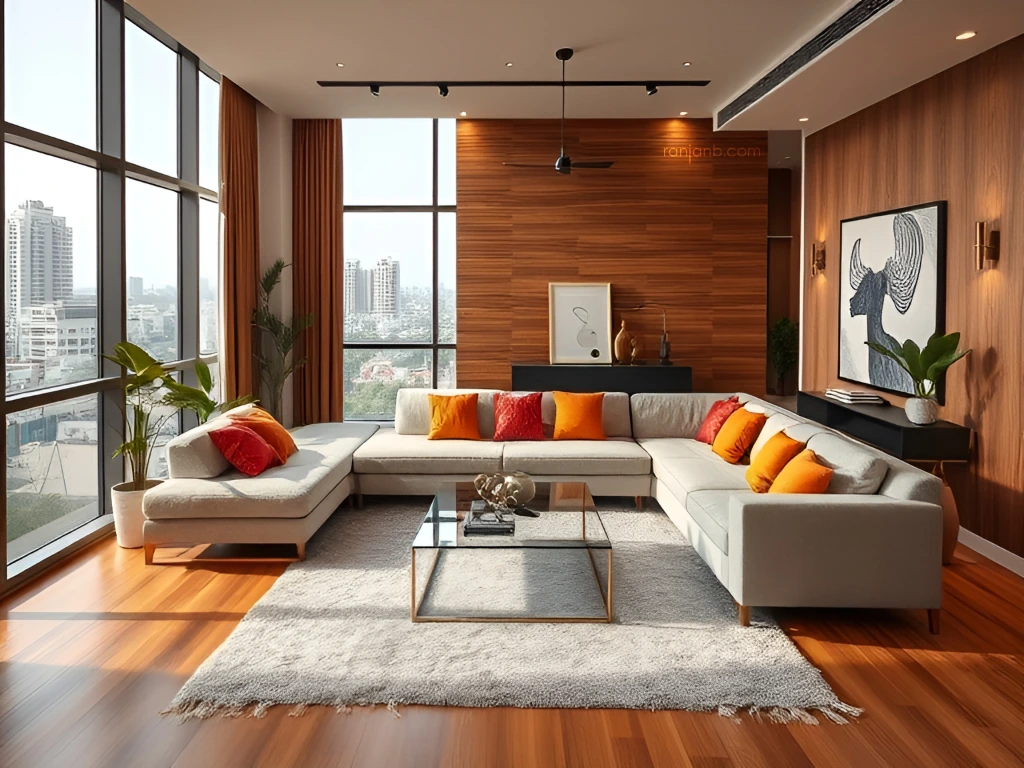
I shoot almost entirely in natural light. Not because I can't use artificial lighting — I can, and sometimes I do — but because the spaces I photograph were designed around natural light, and that's the story worth telling. This philosophy shapes every architectural and interior photography commission I undertake — from a single residential apartment to a multi-floor corporate headquarters.
My primary kit for interior work is the Canon EOS R5 paired with a Canon RF 15-35mm f/2.8L lens. This combination gives me exceptional dynamic range and sharpness across wide angles without the distortion that cheaper lenses introduce. In a beautifully proportioned room, lens distortion isn't just a technical flaw — it's a lie about the architecture.
On the rare occasions when I do bring in supplementary light, I never point it directly at the subject. I bounce it — off walls, off ceilings, off white cards — so that it wraps around the space the same way natural light does. The goal is always to make supplementary light invisible. If you can see where the light is coming from, it's already wrong.
But in an architect-designed space, you genuinely don't need much of this. These are spaces where the window wasn't placed by accident. They were designed to do exactly what I need them to do.
The Window Is Your Best Asset
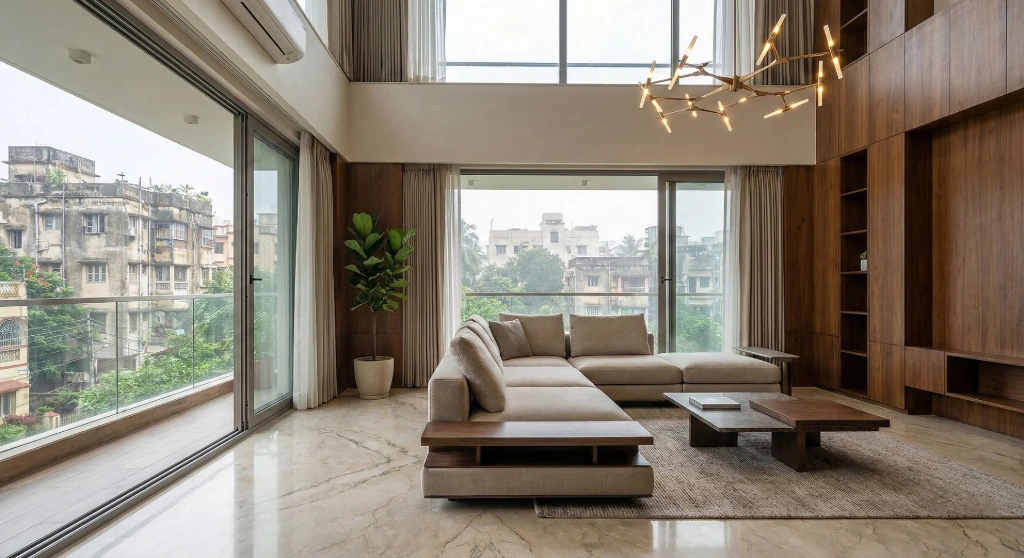
One of the things I'm most particular about on a shoot is the relationship between the interior and what's outside that window.
This matters more than most photographers realise. When you look at an interior photograph and the outside is blown out to pure white — that clinical, washed-out rectangle where the window should be — it creates a subtle but real sense of unease. The room feels like it exists in a void. There's no context, no life, no sense of the city or landscape it sits within.
I expose my shots so that the exterior remains visible. Maybe it's 20% of the frame. Maybe less. But it's there — a suggestion of trees, a glimpse of sky, the warm glow of an afternoon street. That small detail transforms a room from a studio set into a place where someone actually lives or works.
To achieve this without flooding the interior with artificial fill light, I work with what the space gives me. I adjust my position, my timing, my focal length. I shoot at the hour when the interior light and exterior light are closest in intensity — usually that window is narrower than most people expect. You get maybe 40 minutes in the morning, sometimes less.
This is why I ask architects and clients not to rush the process. The right light isn't scheduled by convenience. It arrives when it arrives.
Why This Matters for Architects Specifically
Here's something I've observed over and over in my career: architects are better clients for interior photography than almost anyone else, because they already understand what I'm trying to do.
When I talk about the quality of north light versus south light, or explain why I want to wait for cloud cover before shooting a west-facing room, architects don't look at me blankly. They nod. This is the language they've been speaking their entire careers.
And this shared understanding translates directly into better images.
But beyond the technical conversation, there's a business reality that's worth naming directly. In Kolkata's increasingly competitive architectural landscape, your completed projects are your most powerful marketing tool. Not your credentials. Not your firm's history. Your work — photographed in a way that communicates its actual quality.
When a prospective client looks at your portfolio, they're not analysing structural calculations or assessing material specifications. They're asking themselves a simpler question: Does this make me feel something? Do I want to inhabit this space?
Professional photography doesn't just document your work. It creates an emotional response to it.
The Difference Between Documentation and Storytelling
There's a level of interior photography that's purely functional — you need a record of the project, something to show clients during the presentation phase, images for your own archive. This is documentation, and it's a legitimate need.
But there's another level entirely, which is what I'd call architectural storytelling. This is photography that doesn't just show a room — it communicates the idea behind the room. The intention. The experience of being inside it.
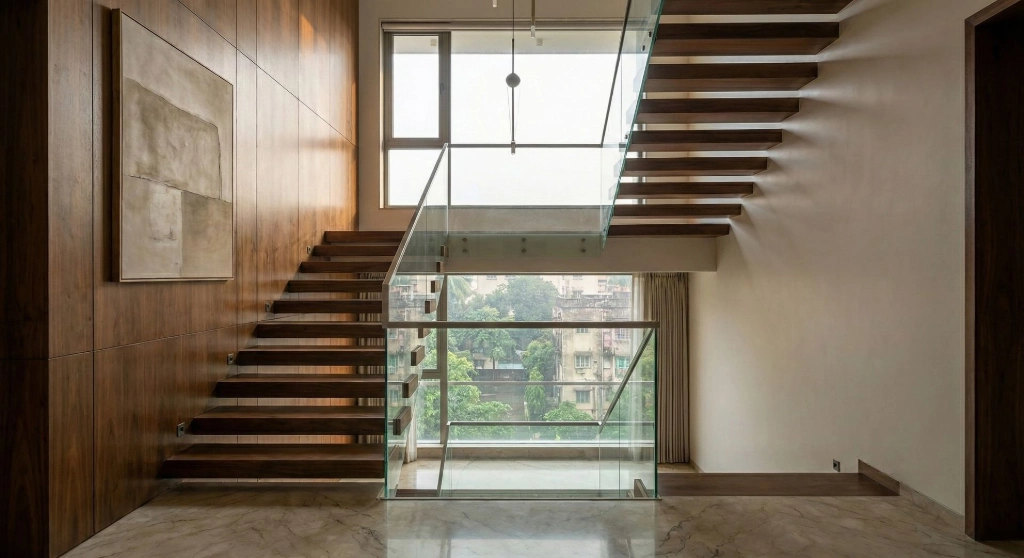
The difference shows up in where you place the camera, how you handle shadows, whether you shoot the space as a whole or find the detail that unlocks the entire design concept. Sometimes the most powerful image from an entire project is a single oblique shot of afternoon light crossing a custom joinery detail. Sometimes it's a wide shot from a specific corner that makes a modest-sized room feel genuinely expansive. The Rajarhat duplex project is a good example — a multi-level space where natural light and vertical continuity became the entire narrative.
Finding these images requires time in the space. It requires walking in it, sitting in it, watching how the light moves through it across an hour. This is not a process you can rush, and photographers who charge by the hour have an incentive to rush it. I don't work that way.
Equipment That Earns Its Place
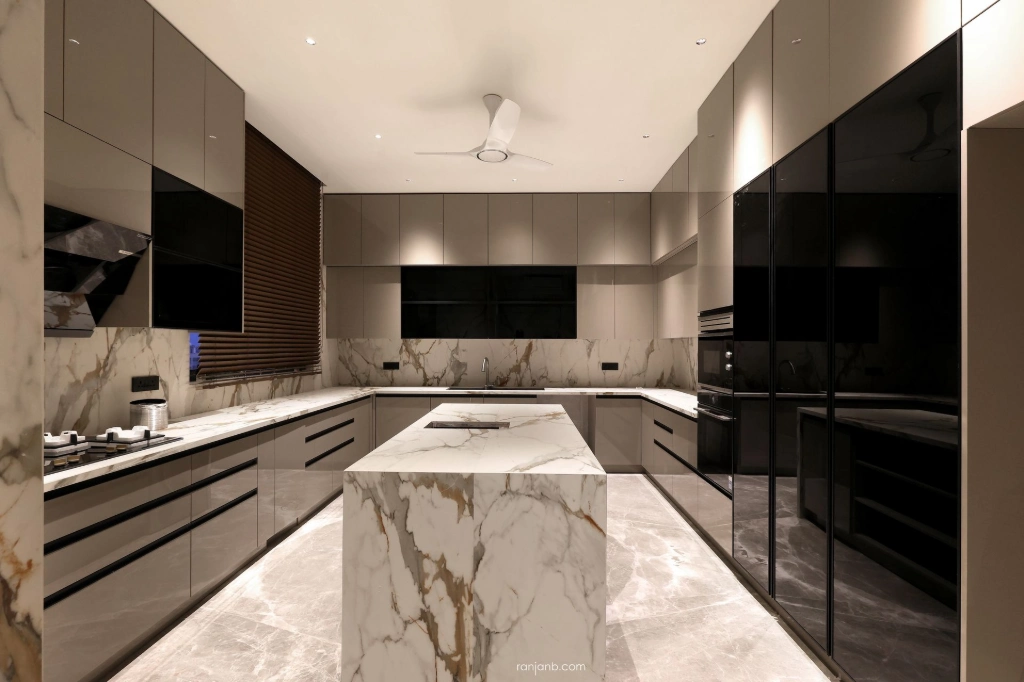
I mentioned the Canon R5 and RF 15-35mm earlier. Let me explain why this combination specifically matters for architectural work.
The R5's 45-megapixel sensor gives me extraordinary latitude in post-processing — I can recover shadow detail and highlight information in the same image to a degree that wasn't possible even five years ago. This is critical for interior photography, where the contrast range between a sunlit window and a shadowed corner can be extreme.
This isn't gear-talk for its own sake. The equipment serves a philosophy: capture what the architect actually built, in the light they designed the space to receive, without imposing anything artificial on a space that was designed with great care.
A Word About Timing
The most common scheduling mistake I see: treating an interior photography shoot like a painting or a graphic design job — something that can happen any time during business hours.
Interior photography is time-sensitive in a way that almost no other commercial photography is. The quality of the images depends directly on the quality of the light, and the quality of the light depends on time of day, season, weather, and the specific orientation of the space.
Before any shoot, I visit the space at different times of day if I can. I look at which rooms face which direction. I note where the sun enters and when. For a south-facing living room in Kolkata, that might mean arriving at 8 am before the sun gets harsh. For a north-facing study, I might actually prefer an overcast afternoon, when the light is diffused and consistent across the whole room.
When I tell an architect client that we need to shoot the master bedroom between 7 am and 9 am on a day with partial cloud cover, I'm not being difficult. I'm protecting the quality of images that will represent their work for years.
What Great Architecture Photography Does For Your Practice
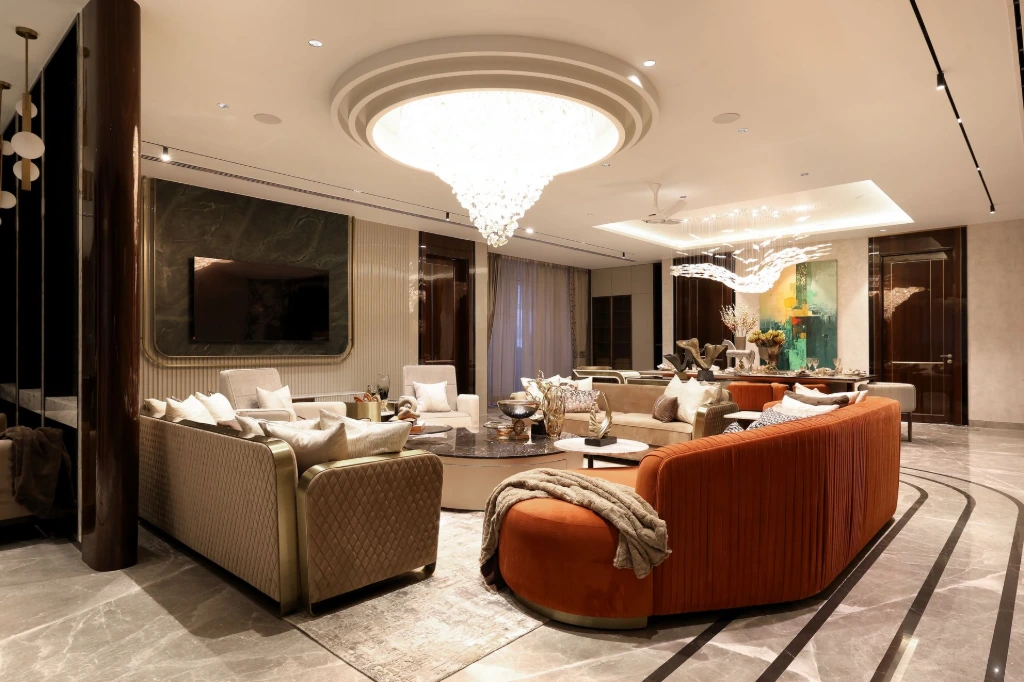
I want to close with something practical, because ultimately this is a business conversation as much as an aesthetic one.
In Kolkata's design community, referrals still drive most work. A client who loves their home or office becomes an advocate — and the photographs of that space are what they show when they recommend you to friends, colleagues, and family members who are about to undertake their own projects.
Those photographs travel. They appear on Instagram, on WhatsApp, in email forwards, on your firm's website, in award submissions, and in magazine pitches. The quality of those images reflects directly on your work — not because great photography can compensate for mediocre design, but because poor photography can make excellent design look mediocre.
I've watched this happen. A Kolkata architect's genuinely remarkable project was photographed badly, shared widely, and received a fraction of the engagement it deserved — while a less interesting project from another firm, shot professionally, went viral in the city's design circles.
The photography doesn't create the quality. But it controls whether the quality gets seen. The Urbana luxury residence shoot in Kolkata was built entirely around this idea — every frame chosen for what it revealed about the design intent, not just what it documented.
Starting a Conversation
If you're an architect or interior designer in Kolkata working on a project you're genuinely proud of, I'd welcome a conversation about how we might document it — not just record it, but tell its story in a way that does justice to everything you put into it.
Twenty-four years behind the camera has taught me one thing above everything else: every space has a version of itself that it wants to show the world. My job is to find that version, and to be patient enough to wait for the light that reveals it.