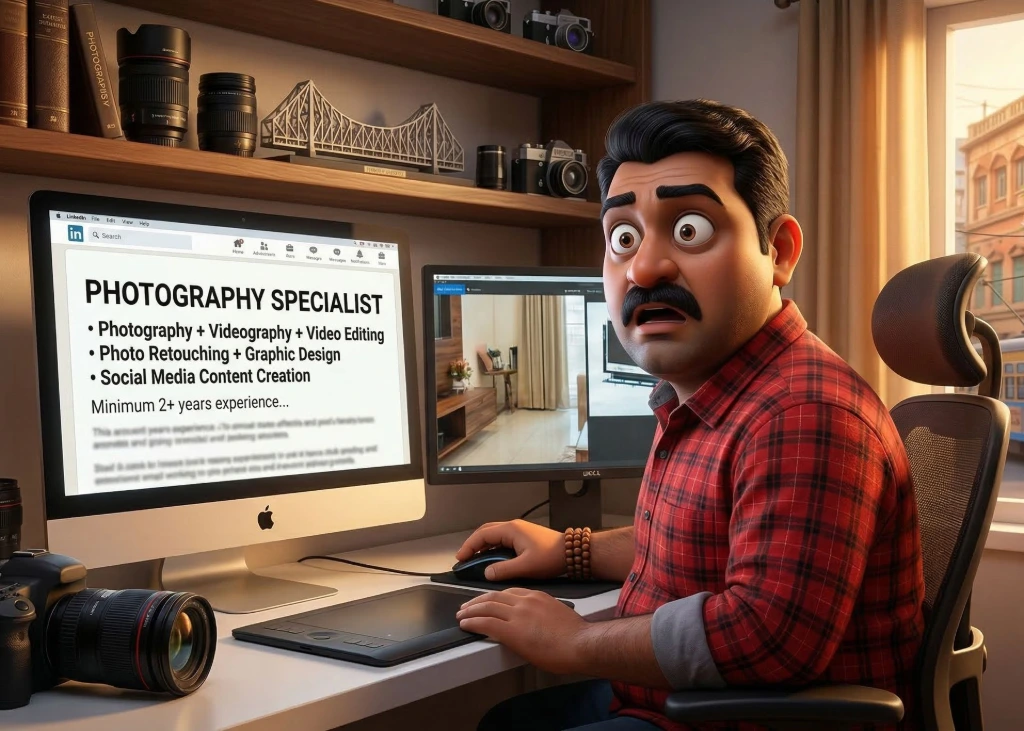
I was scrolling through LinkedIn recently — the way most of us do, half-distracted, half-curious — when a job notification stopped me completely.
The title said Photography Specialist.
I clicked.
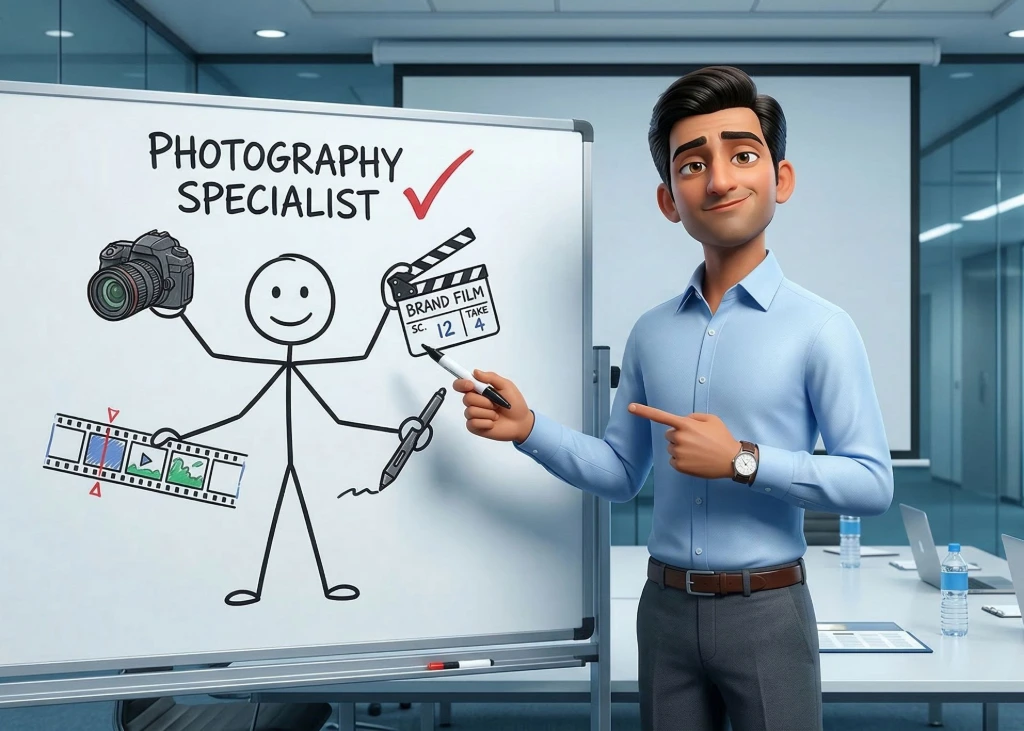
The job description asked for someone who could handle photography, videography, video editing, and photo retouching. All four. One person. One salary.
I sat back in my chair and thought about something my grandfather used to say about farming. The man who grows the paddy in the field and the man who mills it into rice — they are not the same person. They never were. And asking one to replace the other does not make your rice cheaper. It makes it inedible.
Twenty-four years of commercial photography later, I can tell you with complete confidence that what that job post described is not one job. It is four separate professions, each requiring years of dedicated practice, a fundamentally different eye, and a completely different relationship with the final output.
Let me explain exactly why.
What a Professional Photographer Actually Does
A professional photographer's entire world exists in a single frozen moment.
Before the shutter clicks, everything has already been decided — the quality of light falling on the subject, the angle that makes a product surface breathe, the precise distance that makes a face look authoritative rather than distorted. In advertising photography, that one frame needs to carry the entire weight of a brand's message. There is no second chance once the moment passes.
This is not just technical knowledge. It is years of training the eye to see what a camera sees, not what a human eye sees — because the two are very different things. A skilled photographer working on a commercial photography brief knows that what looks balanced in person will look flat on a screen, and compensates before pressing the shutter.
When brands invest in proper advertising photography, they are not paying for a camera and a person to hold it. They are paying for two decades of that specific visual judgment.
What a Cinematographer Does — And Why It Is a Different Job
Here is where I want to be precise, because there is a common misconception that needs to be addressed directly.
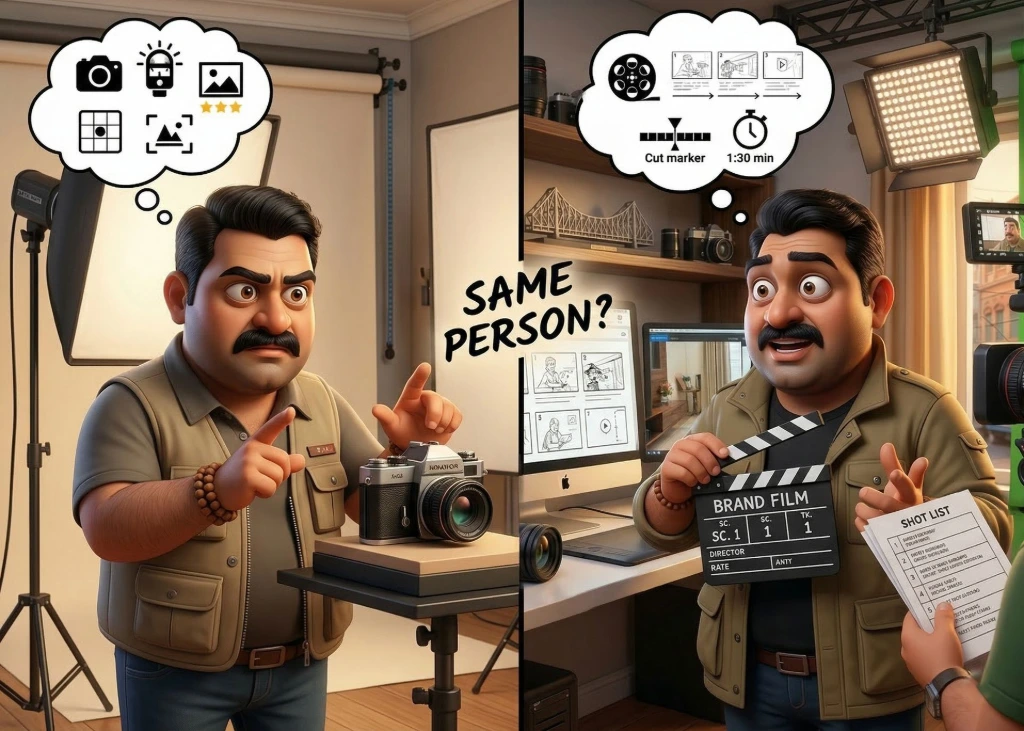
An experienced photographer and an experienced ad film director are, in many ways, equals in their respective crafts. I can work alongside a film director, and we understand each other's language completely. But the person operating the camera during a brand film shoot — the cinematographer — and the photographer directing the visual narrative of that film are doing two entirely different jobs at the same time.
The camera operator's mind is fully occupied with technical execution — aperture, focus, stability, whether the light is causing grain, whether the frame is level, and whether the connection cables are secure. Every second of the shoot, these questions run in the background.
On my own sets, the person behind the camera for a brand film and the person capturing the film are never the same, because the eye required is fundamentally different.
The director — in my case, me — is watching the story. I am thinking about how many seconds of this particular shot the final ad film actually needs. Whether we have enough coverage to cut to in post. What the next shot on the storyboard requires and how to communicate the angle to the camera operator efficiently, so we do not waste the client's time or budget.
If one person tries to do both simultaneously, neither gets done properly. The camera will drift when the mind shifts to the story. The story will suffer when the mind corrects the focus. This is not a question of skill or experience — it is a question of cognitive load. No human brain runs two parallel creative tracks without losing precision on both.
What a Photo Editor Actually Does
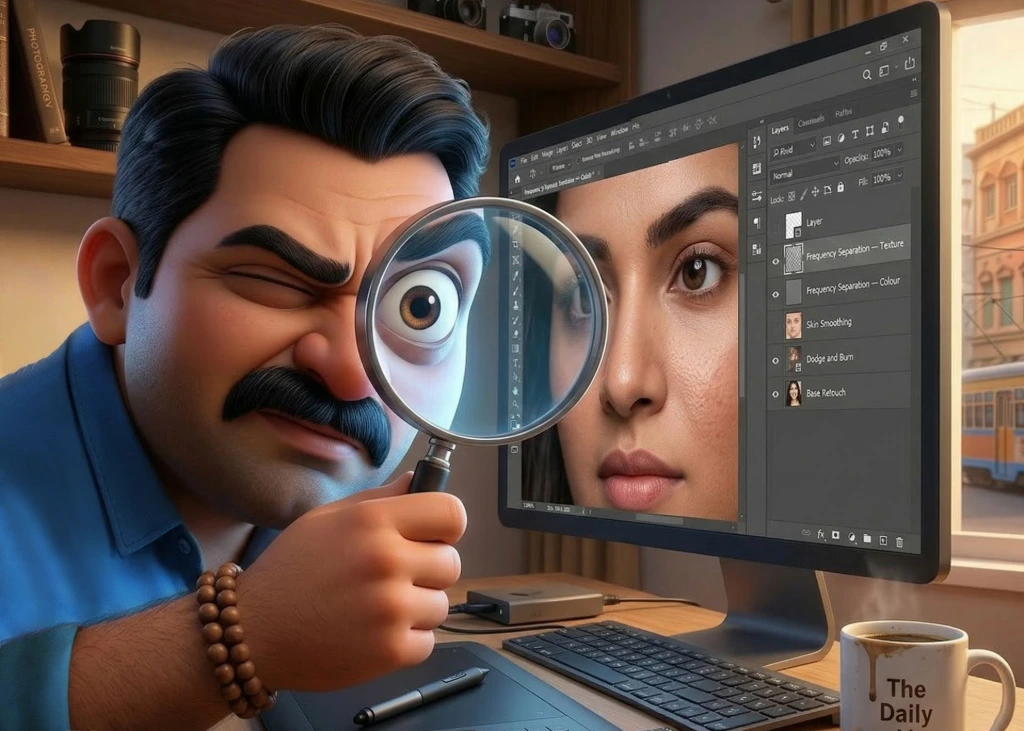
I started my career with Adobe Photoshop before digital photography was even the industry standard. I know what goes into professional photo retouching because I did it myself for years before building a team.
A photographer can do basic colour correction. Adjust exposure. Raise shadows. Most working photographers understand Lightroom at a functional level.
But professional photo editing for commercial photography — the kind that makes a jewellery product photoshoot look like it belongs in Vogue, or makes a branding photoshoot image render identically across a billboard and a phone screen — that is a different discipline entirely.
Skin retouching that preserves the natural texture of a face rather than making it look plastic. Frequency separation. Luminosity masking. These techniques take years to develop, and doing them poorly is immediately apparent to any trained eye. The retoucher on my team has spent years developing this specific skill. A photographer who also shoots video and edits footage simply does not have the capacity to reach this level of precision in image post-production as well.
When you commission a product photoshoot and expect the same person to deliver fully retouched, print-ready images while also managing the shoot itself, you are not getting professional retouching. You are getting rushed retouching.
What a Video Editor Actually Does
Video editing for brand content is not trimming clips and adding a music track.
A professional editor working on advertising content is making hundreds of micro-decisions per minute — pacing cuts to the rhythm of the music, colour grading footage to match a brand's visual identity, managing audio levels, ensuring the narrative arc lands within the first three seconds because that is all the attention a social media viewer will give before scrolling.
Fashion photography and interior photography campaigns that extend into video content require editors who understand how a static visual language translates into motion. This is a post-production specialisation. The person who shot the footage is rarely the right person to edit it — because they are too close to the raw material and lack the distance required to make ruthless editorial decisions.
Why Brands Keep Writing These Job Descriptions
I understand the budget reality. Small and mid-sized brands across India are building visual content pipelines on limited resources, and consolidating roles feels like efficiency.
But here is what actually happens when one person is asked to cover all four of these functions.
The photography suffers because the photographer is anxious about the video they also need to shoot. The video suffers because the person behind the camera is not being directed — they are self-directing, which means the story has no external eye. The photo editing is rushed because there are also hours of footage to cut. The video edit is generic because the editor is exhausted and overextended.
You do not get four outcomes. You get four compromised ones.
Brands that have worked with structured commercial photography and film production teams — where each role is held by a specialist — consistently produce visual content that performs better, requires fewer reshoots, and builds stronger brand equity over time. Not because they spent more money. Because they spent it correctly.
A well-executed advertising photography campaign, where the photographer is focused exclusively on the still visual narrative, delivers images that can anchor a brand's identity for years. Similarly, interior photography that is shot by someone whose entire attention is on spatial light and architectural geometry — rather than someone simultaneously thinking about the video walkthrough they also need to capture — produces work that sells premium properties and wins design awards.
What LinkedIn's Algorithm Missed
LinkedIn is a professional platform. It is where careers are built, and industry standards are set.
When a job post describing four separate professional disciplines gets published without any filter, promoted to thousands of creative professionals, and lands in the notification feeds of photographers who have spent decades mastering a single craft — it sends a signal. It tells the market that these skills are interchangeable. A professional photographer is simply someone who points a camera at things, and can therefore point it at anything, in any format, and edit whatever comes out of it.
That signal is wrong. And its consequences are paid by brands who hire based on it — in missed campaign targets, in visual content that looks competent but never remarkable, in the quiet erosion of what professional commercial photography actually means.
The Question Worth Asking Before Your Next Brief
Before you write your next job description or creative brief, ask yourself one question honestly.
Are you looking for a photographer — someone whose entire professional attention will be on making your product, your space, or your brand look extraordinary in a still frame?
Or are you looking for a visual production team — specialists who each bring a decade of focused expertise to their specific role in your campaign?
Because those are two very different conversations. And two very different results.
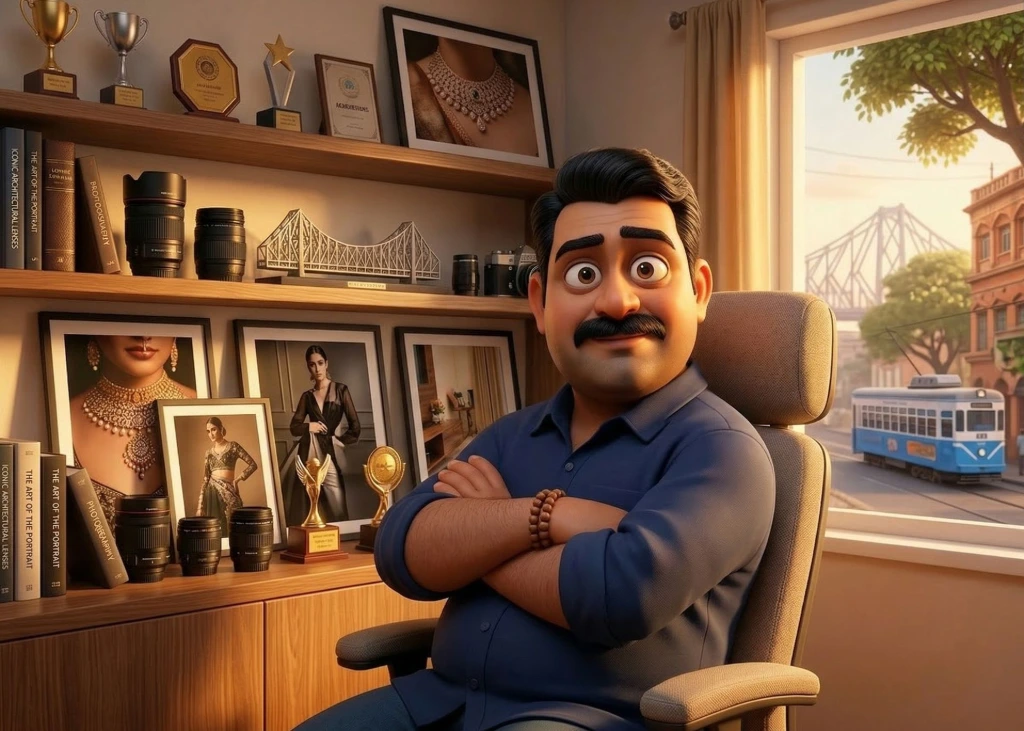
If it is the former — a photographer whose entire career has been built around commercial photography, product photoshoot execution, interior photography, and advertising campaigns for brands across India — that conversation starts here.
If it is the latter — a full production team where every specialist does exactly one thing, and does it exceptionally — that conversation also starts with a look at how we work.
What it cannot be, in good conscience, is one job post with four profession descriptions and a single salary line.
The paddy does not mill itself.